
This page contains updates from our POLARIS model as well as further analysis on those results.
-
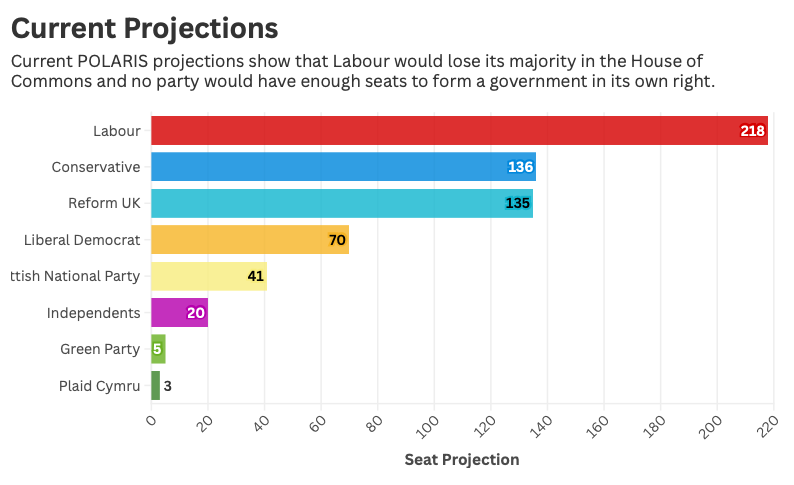
Projections show Reform UK and Conservatives would be neck-and-neck in an election today
2nd April 2025
The POLARIS model indicates a fragmented political landscape, where forming a stable governing coalition would be exceptionally difficult. Labour, despite still being predicted to be the largest party, is projected to fall significantly short of a majority.
-
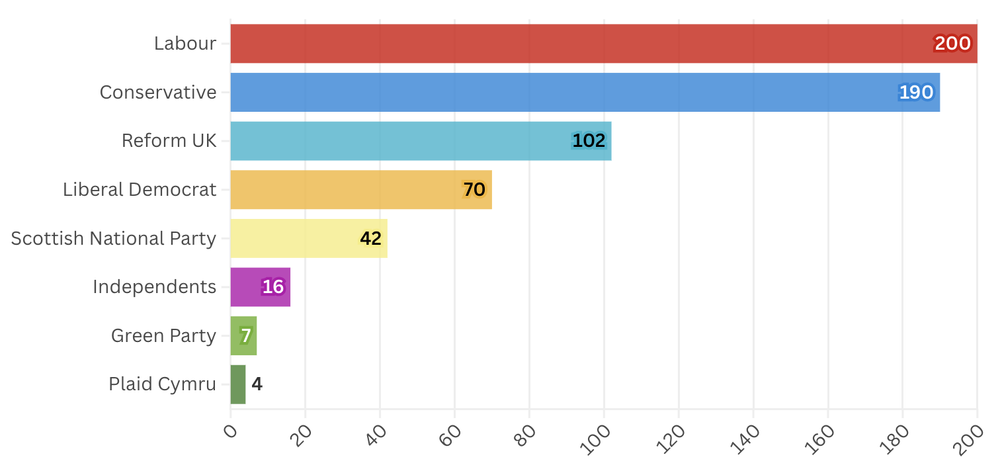
Reform UK are on Track to Win Over 100 Seats
9th February 2025
As Reform UK passes the 100 seat mark in POLARIS’ projections this report takes a deep dive look at the constituencies projected to be won by the party in a General Election. Using surveys, interviews and state-of-the-art modelling this report presents a fresh view on the changing shape of British Politics and those behind the tectonic shifts.
-
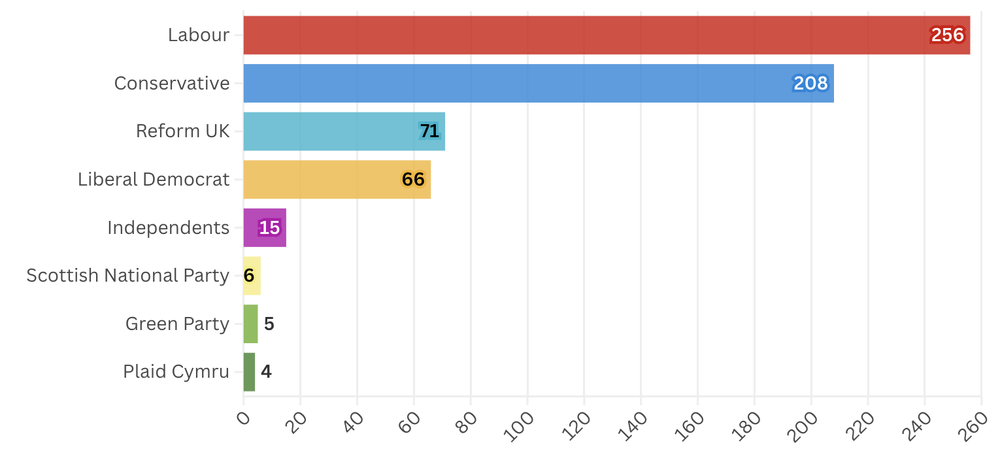
POLARIS: A New Method For Election Prediction
28th December 2024
POLARIS (Political Analysis through Regional and Local Insights System) is a new model developed to leverage the wealth of data provided by council by-election results to predict election outcomes mid-cycle. This method uses demographic indicators of council wards that these elections take place in, such as proportion of degree educated individuals and the proportion of those unemployed, to predict vote share changes for each of the major parties.